Day 2 - 2026-05-08 - Wilpina Pound Resort, Flinders Rangers
With my cold improving, I had a good nights sleep, whilst Karen endured her first night of the latest cold. We awoke to a clear, crisp 6deg c morning
After breakfast cereal in our room, we headed off to purchase a National Parks Entry Pass ($14/d) and we started the easier hike to Wanagara Lookout, via the historic Hills stone homestead.
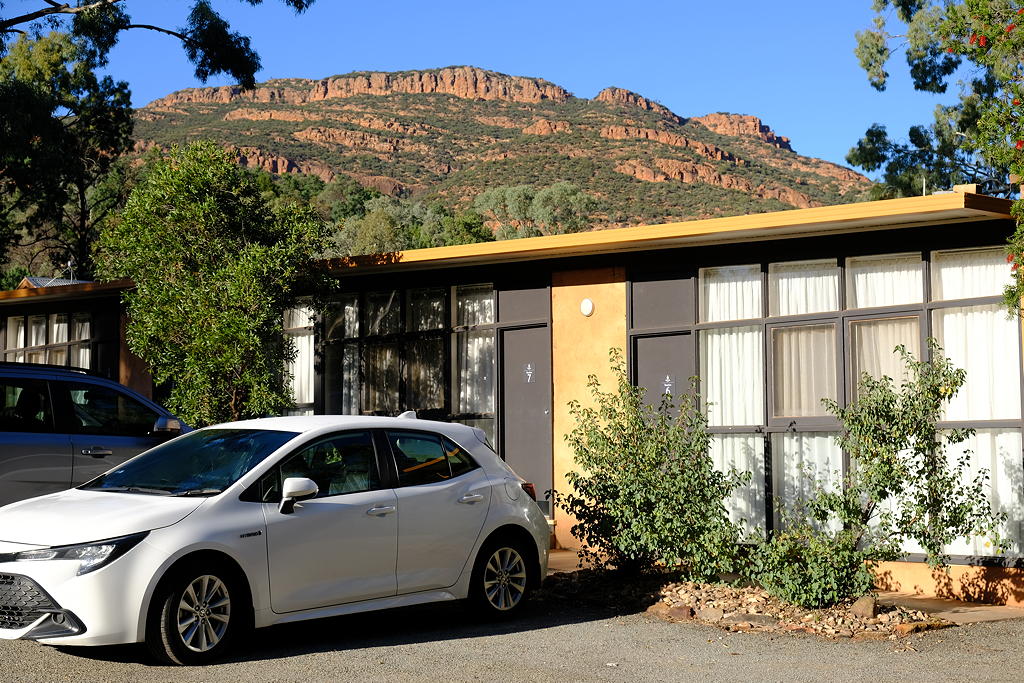 2.1 - Wilpena Pound Resort - remote & comfortable
It was about 4km mainly flat hike along the river bed to the restored Hills Homestead building. There was river water flowing from the recent rain and a lot of flood debris of logs and branches. A lot of riverbank trees had been uprooted after surviving hundred of years, and there was evidence of recent flood debri clearing .
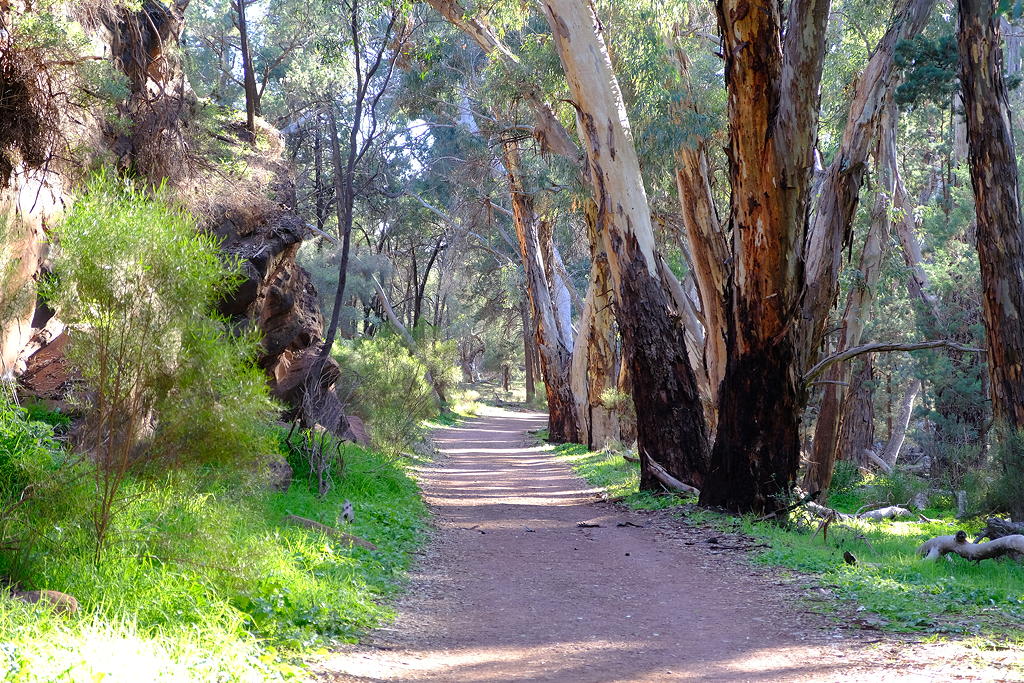 2.2 - Hill Homestead Hike along the river
Wilpena Pound History
1839: Edward John Eyre traversed the ranges as he travelled north discovering the vast Lake Eyre. By the 1850s, although the land was deemed to be beyond the limits of cultivation, large tracts of the land were being leased.
1851: South Australian sheep pastoralist, Harry Price managed the Browne Brothers’s 2,000sq km Wilpena Station in the Flinders Ranges. This included the recently discovered Wilpena Pound, a spectacular natural amphitheatre. In doing so he selected the picturesque site for the first homestead, beside Wilpena Creek, upon a flat studded with noble native pines and majestic red gums, flanked by the soaring range of the pound. Given its natural fencing by the mountain ranges, it was first used as a large horse breeding area - hence the name “Wilpena Pound” (an enclosure).
1861: Harry Price was able to buy Wilpena lease from the Brown Brothers for £40,400 (2016- AUD$10mil), including livestock comprising of 17,000 sheep. Also in 1861, Blinman rich copper mines opened and Wilpena homestead was directly on the busy road between Kanyaka and Blinman. Wilpena was paradise for Price, who was destined to hold it for nearly four decades.
1865: George Goyder (the colony’s Surveyor-General) traversed 3,200 km of South Australia on horseback and produced a report with the line to be know as the Goyder Line, which joined places on a east-west line across South Australia with an average annual rainfall of 250mm. North of Goyder’s Line, annual rainfall is usually too low to support cropping, with the land being suitable only for grazing. This line had proven accurate with regard to agricultural expansion in the great drought of the 1880s.
1899: The Hill family from Hawker took out a lease over the whole of the pound. They cleared the land and started wheat farming 140km above the Goyder Line, something never before attempted so far north. Being in the shadow of some of the highest mountains of the Flinders, rainfall in the Pound is a little higher with snow even being very rarely known on St Mary Peak.
1904: After labouring to construct a road through the torturous Wilpena Gap, the Hills built a small homestead at the gap, and cleared open patches in the thick scrub of the interior. For several years, the Hill family had moderate success growing crops inside the Pound.
1914: A major flood destroyed the road through the gorge. They could not bear to start all over again and sold their homestead and farm lease back to the government. Reference: Wikipedia - Wilpena Pound
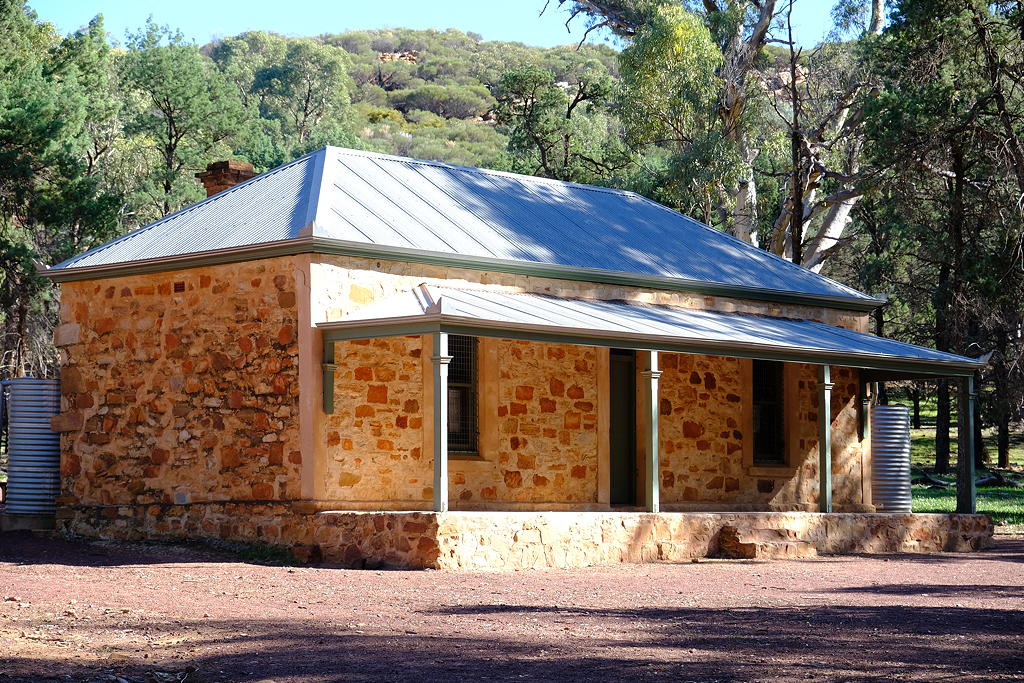 2.3 - Hill Homestead - built 1904 and housed a family of 11
Following the signs behind the stone house, our hike continued up a stoney, rocky path to the Wanagara Lookout. The day was now warming up as we arrived to enjoy the clear view over the majestic Flinders Ranges from the 685m lookout. The hike down was quite technical and required concentration. This hike had some hikers continuing past the Hill Homestead to the much longer and more stenuous climbs of the St Mary Peak hike. We finished after 2.5hrs moving (3hrs total). It was a good workout and well worth it to see the river banks and then the many hundred million year old Flinders Ranges
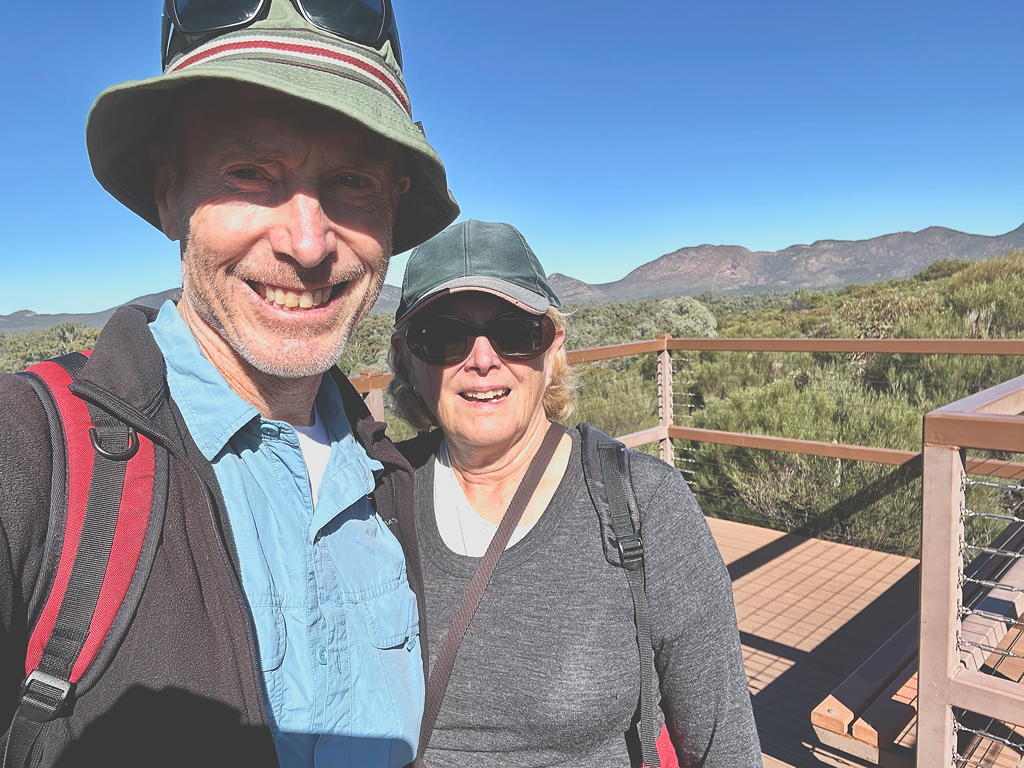 2.4 - Wanagara Lookout - 685 metres
After a rest and coffee, we drove up to small historic tin mining village of Blinman. Back in the mining boom peak, the population of Blinman and Noeth Blinman was 1,500 compared to today’s 50 residents. I had previously riddent through on a motorcycle in Sept 2012, enroute to Marree. On that trip, I had taken the dirt track west to Parachilna through three river crossings. We had a walk around town, and a bite to eat from our supplies. Today there were a lot of flys to annoy us and coat the adventure motorcyclist’s windshield and helmets. We returned south along the same road, including stops to view the appropriately named “Great Wall of China” range and the Hucks Lookout. The sign says the ranges formed an incomprehensible 500 to 1000 millions years ago.
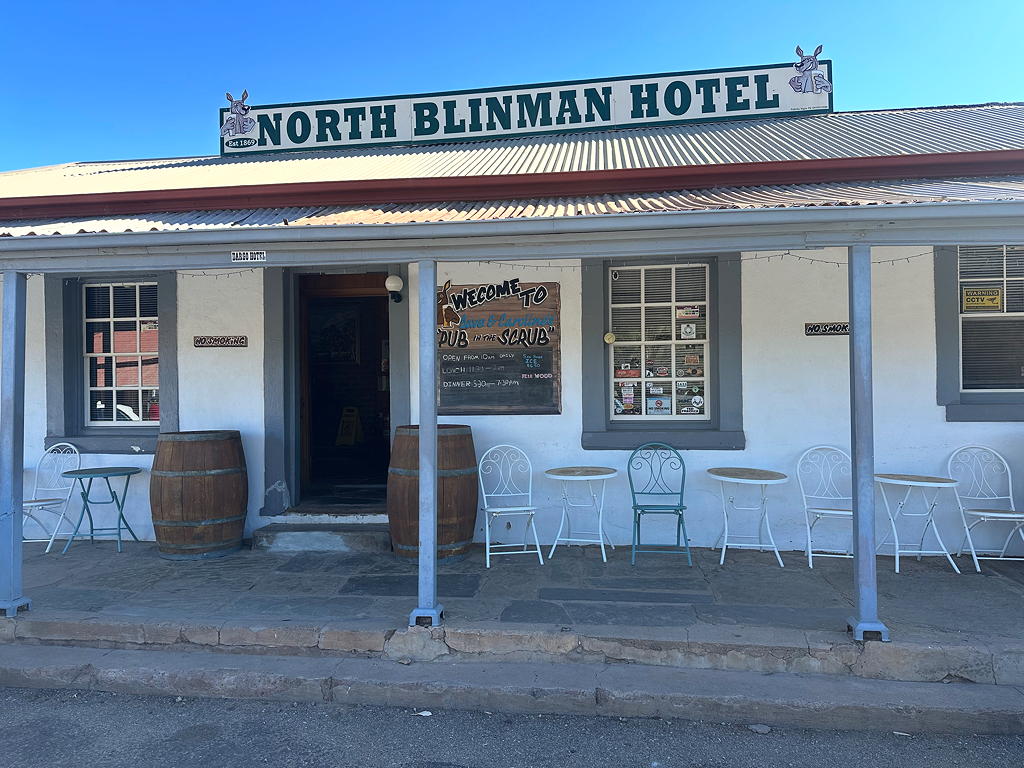 2.5 - Blinman Hotel - Flinders Ranges
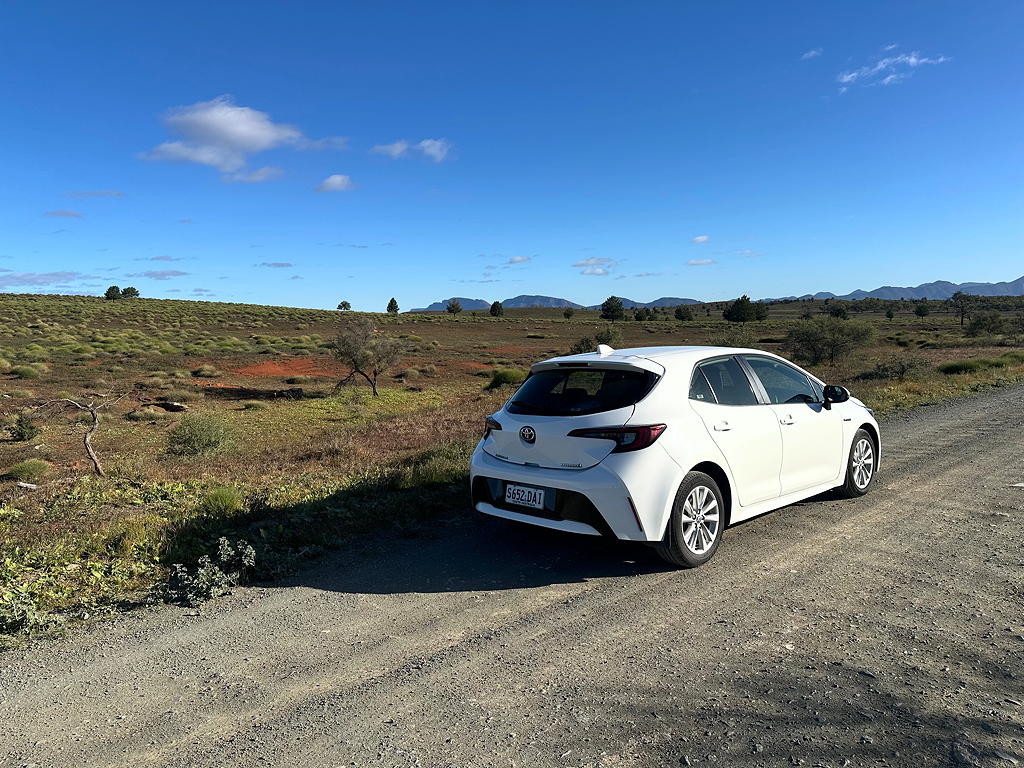 2.6 - Side Road on Flinders Valley Way
On return to Wilpena Pound, Karen had a rest and I enjoye a sunset walk. The resort and the camping areas were busier for the weekend, including a number of organised tour groups.
Dinner was again in the resort restaurants, finding out that a South Australian “schooner” glass of beer is the equalivent of a NSW “middy” of beer - another strange state based difference.
The usual myth that South Australia is alway different due to it being the only state in Australia that did not received English and Irish convicts. Between 1788 to 1868, imprisonment in the U.K. equated to one way transportion as a convict to work as forced labour. My dear grandma’s grandfather was transported to the colony of NSW in 1826 for stealing duck and meal and served 7 years as a convict labourer, before freedom, setting up a cedar cutting business and eventually marriage and children as a farmer.
Tomorrow we leave Wilpena Pound and return via the bitumen to Hawker for breakfast, refuel the car and completing the final 330km drive to Marree. The petrol costs are risings as we go more remote and there is not always petrol available in some of the smaller villages. The hybrid Corolla is quiet economical and I managed to drive for about 3km on a full battery and a light foot!